Creating Pollinator Habitat
Ideally, habitat for pollinators:
- Avoids the use of pesticides, especially neonicotinoids.
- Provides host plants* and flowering plants that are native to our region with a variety of blooming periods to provide pollen and nectar to pollinators as a year-round food source. (See "Native Plant Resources" below for details.)
- Provides nesting sites to support pollinators throughout their life cycle. (See "Nesting Sites for Pollinators" below for details.)
- Is not near (within 3 miles) of a honey bee hive, since honey bees means limited resources available to native pollinators.
- Avoids artificial lighting, unless illuminating a structure or hazard.
In February and March, the SDPA hosted a series of three virtual workshops on creating pollinator gardens in back yards, school gardens, churches, or any other space you have access to. Several guest speakers / Pollinator Alliance members kindly contributed, including Dr Michael Wall of the San Diego Natural History Museum, Annika Nabors of the UC Cooperative Extension, Mary Duffy from Earth Discovery Institute, and Alden Hough from Sky Mountain Permaculture. Workshops can also be viewed on our YouTube channel here.
General
How to create a pollinator garden- A printable guide to the components of a pollinator garden.
Creating Habitat in Yards, Containers, and Other Tiny Spaces
- Limited on space, but want to support pollinators? This is an excellent video for anyone to learn how a native garden(big or small!) can be a quality habitat for invertebrates. (Xerces Youtube video)
Nesting habitat for native bees (including plant list for stem-nesting bees)
- A printable guide to providing safe nesting sites to the many types of native bees.
Protection from Pesticide
Best Management Practices to Protect Bees from Pesticides
- Precautions to protect bees from pesticide poisoning from the UC Integrated Pest Management Program.
- A guide from the Xerces Society on how and why to protect pollinators from pesticide.
Programs
Pollinator Habitat Restoration on Working Lands
- Use this informative guide to learn the co-benefits of pollinator services for working lands, like farms and ranches. If you are a commerical farmer or rancher in San Diego interested in this program, please fill out this form.
Residential Monarch Habitat Installation Program - Earth Discovery Institute
- Earth Discovery Institute will identify home garden sites to establish habitats that support the imperiled western monarch butterfly. Priority will be given to residents from under-served communities and different climactic zones throughout San Diego County. Check their site here for more eligibility requirements.
Southern California Residential Pollinator Habitat Kits
- The Xerces Society's Southern California Habitat Kit Program serves to provide free transplants of native, pollinator-friendly species to residents in Southern California.
- A certification for gardens that provide the resources that monarchs (and other pollinators) need. By registering as a Monarch Waystation, you join a national network of pollinator habitats.
Species-Specific Guides
- Tips from Monarch Joint Venture on attracting monarchs (and other pollinators) to your yard.
- Find Native Plants for Monarchs | Xerces Society
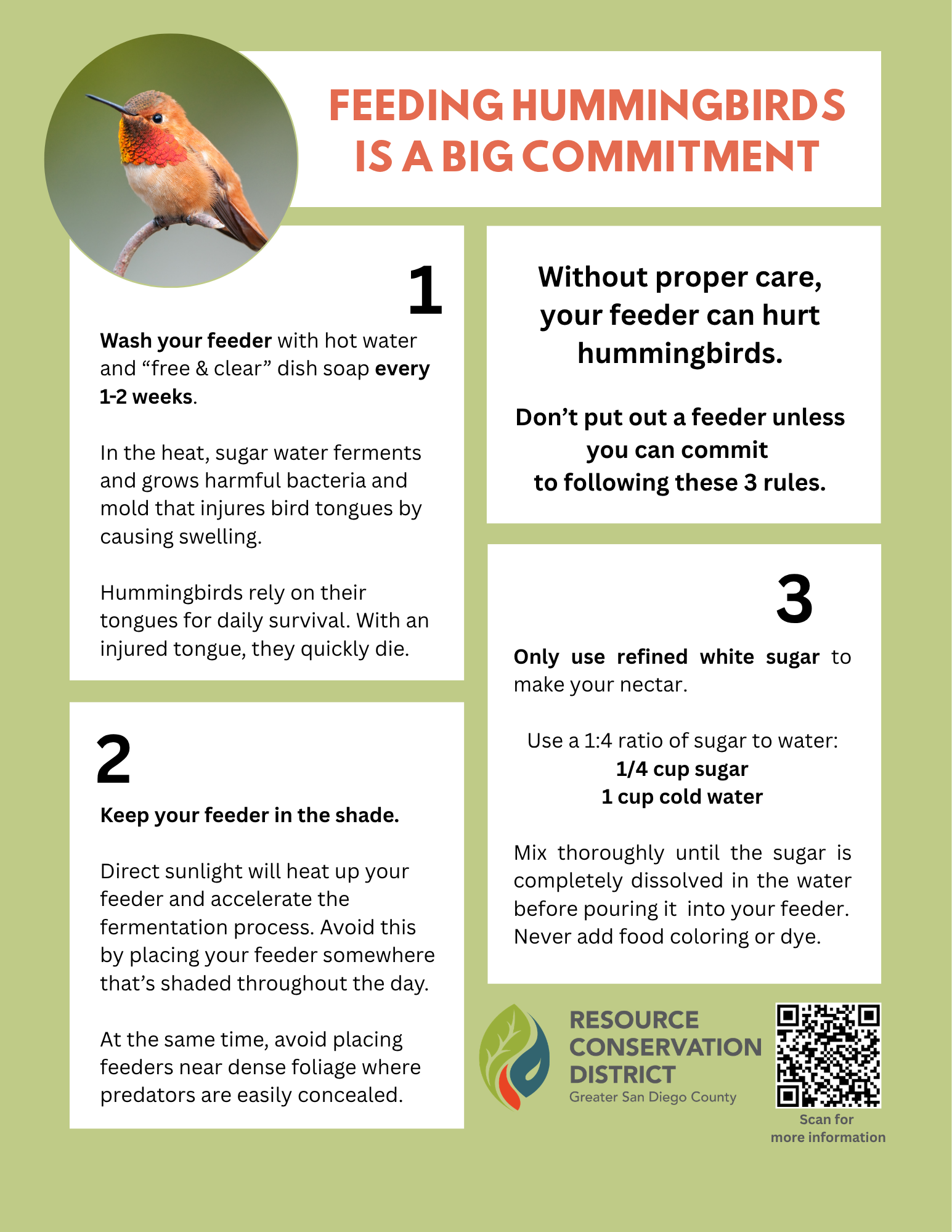
Safely Feeding Hummingbirds
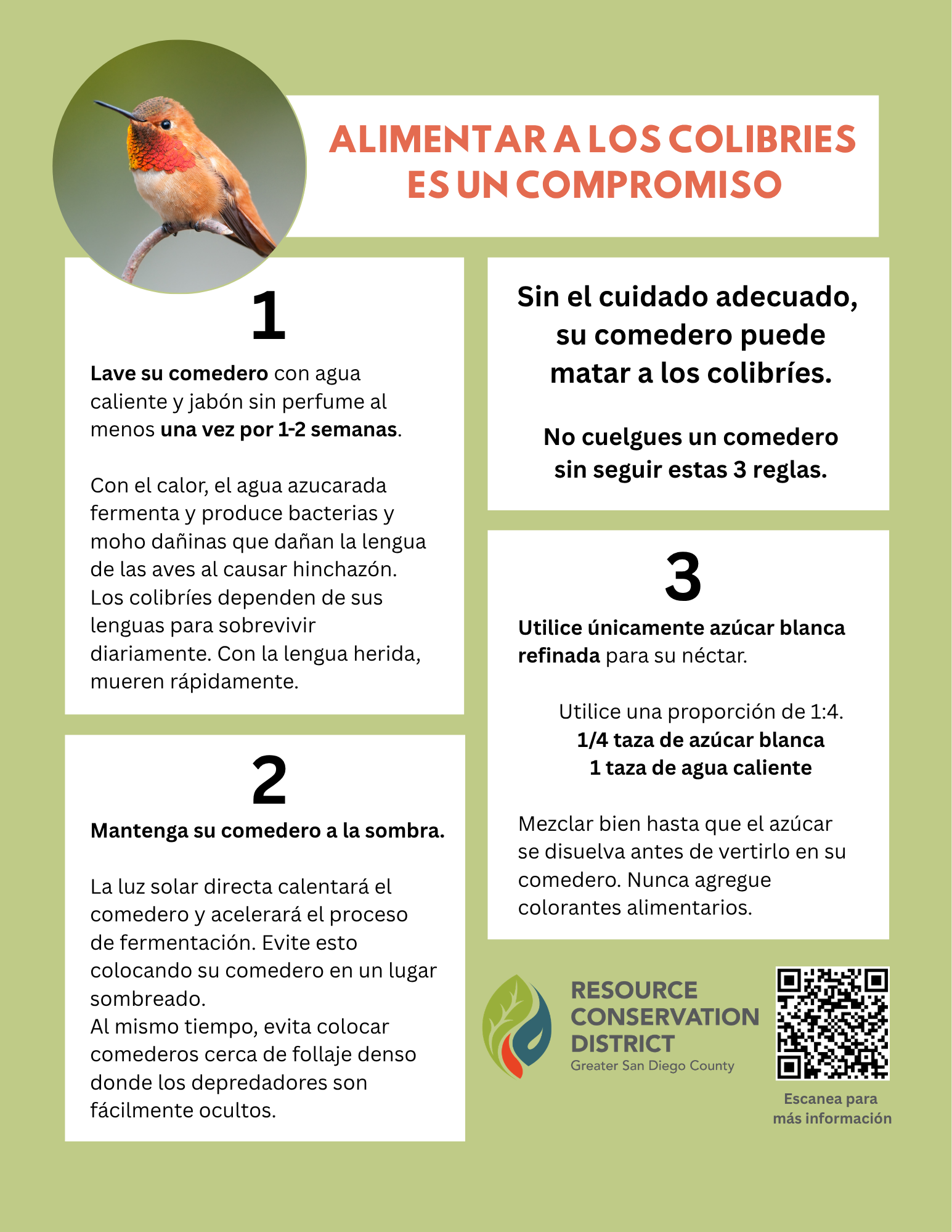
Safely Feeding Hummingbirds Flyer (English).pngAlimentar A Los Colibries Flyer (Español).pngSupport Native Bees
Creating safe nesting habitats for native bees is just as important as providing food.
Unlike honeybees, nearly all of the bees native to North America are solitary and do not form social hives. For millions of years, this region only knew those solitary bees, until honeybees were introduced in California in 1853. The honeybees you often see today in California are a species native to Europe, Africa, or are a hybrid of the two.
Do you know the difference between native bees and honey bees?Around 70% of bees native to North America nest in the ground. The other 30% nest in cavities such as old beetle tunnels in wood or hollow plant stems. Because native bees they spend most of their lives in nests underground or in cavities, the availability of this nesting habitat is critical in supporting native bee populations.
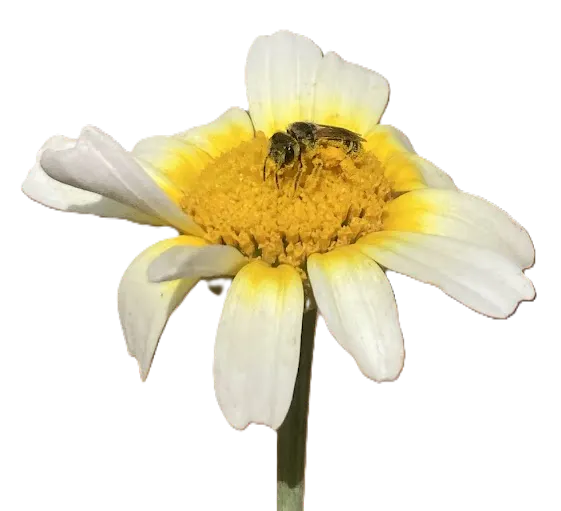
To provide nesting sites for ground-nesting bees, leave some bare or sparsely vegetated patches of soil near flowering plants. Ground-nesting bees rely on patches of loose, undisturbed, sunny soil. Keep some parts of your garden un-vegetated and un-mulched and avoid soil disturbance like tilling to provide safe nesting sites.
To provide nesting sites for cavity-nesting bees, plants with hollow or pithy stems should be left untouched over the winter and should not be cut back until early Spring. The cut stems of these plants should be left in place during the following Spring to provide shelter for bee larvae (baby bees), pupae (kid bees), or overwintering adult bees. For more information on when to prune to protect native bees, click the link below.
Pruning for Stem-Nesting BeesFor a comprehensive, printer-friendly guide to create nesting sites for native bees, please click the link below.
Nesting Habitat or Native Bees (including Pithy Stems Plant Table).pdf
Leave The Leaves
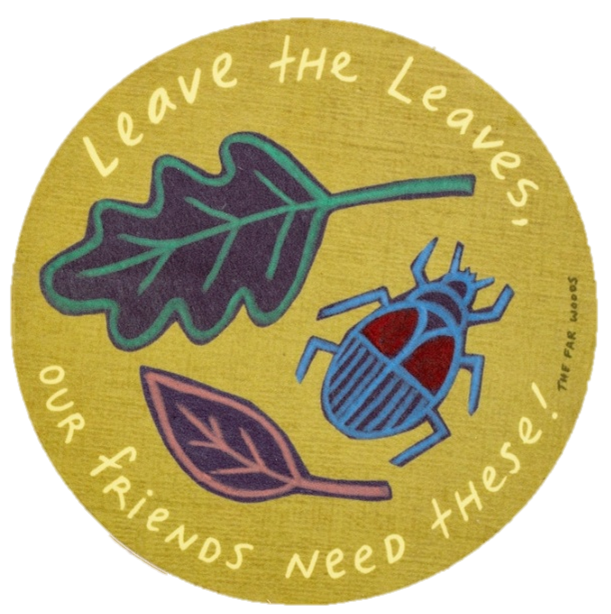
Many species of pollinators like butterflies, moths, bumblebees and beetles use leaf litter as food and shelter in the winter. Without this critical nesting habitat, they are unable to complete their life cycle. Consider redefining a “messy garden” as one that is providing important habitat to pollinators.
- If you do move leaves, avoid using a mower that crushes and shreds leaves. Instead, reach for a rake or leaf-blower that will keep leaves whole.
- If you do decide to remove leaves, wait until late spring to limit disturbance during critical times and give overwintering animals a chance to emerge.
- If you don’t want scattered leaf litter, but still want to support the wildlife who depend on it, consider building a brush pile. See below.
Build A Habitat Pile
A pile of leaves and sticks is a truly magical thing!
If you have the space, creating a habitat pile (also called a brush pile) or “bug snug” is an easy and effective way to provide valuable habitat to a variety of animals. Habitat piles can simultaneously provide overwintering sites to butterflies, moths, bumblebees, and beetles, hiding, feeding, and perching places for a variety of songbirds, and protection from predators and the elements for lizards and small mammals.

Support Bats
San Diego is home to an incredible 23 species of bats! In addition to their talents as natural pest control protecting crops, forests, and people from insects, bats pollinate a wide variety of plants, including agave, guava, bananas, evening primrose, and some species of cactus.
Like other pollinators, bats face threats such as habitat loss due to development, invasive plant species, light pollution, wisepread use of pesticide, and climate-change related impacts. You can help create healthy nesting sites for bats by building a bat house following evidence-based designs:
649_CA_PS_Structures_for_Wildlife-Bat_Houses_2015.docx
Plants
- An incredible interactive tool to help you design a native garden and find plants suited to your space: you can input your address and learn about native plants that will do well in your area, with options to filter by sunlight, soil type, and landscaping goals.
- Discover how to use plants to support your local pollinators.
San Diego Pollinator Plant List
- Here is a quick guide to some plants that thrive in our region.
Xerces Society Pollinator Plant List
- Sort by state to see native plants that pollinators in your region love.
Find Native Plants for Monarchs | Xerces Society
- Discover native host and nectar plants that support monarch butterflies where you live.
Establishing Pollinator Meadows from Seed
- A guide from the Xerces Society on how to create your own pollinator meadow.
Where to get plants
📍View an interactive map of nurseries that sell native plants in San Diego County.
Walqaqsh California native seeds - California's only Indigenous-owned Native seed store.
SoCal Residential Pollinator Habitat Kit Program - Xerces Society
- The Southern California Habitat Kit Program serves to provide free transplants of native, pollinator- friendly species to residents in Southern California.
California Native Plant Society – San Diego Chapter
- Organization dedicated to increasing understanding, appreciation and conservation of California’s native plants in their natural environment and in horticultural settings. Check out their native seed and bulb shop and online resources.
- Map of San Diego Bird Alliance's free native seed libraries located throughout the county.
The San Diego Pollinator Alliance has developed a series of native demonstration pollinator gardens across the county to give residents ideas on how to create pollinator habitat at home. Demonstration pollinator habitats have been planted at Sike’s Adobe within the San Dieguito River Park and the Los Jilgueros Preserve in Fallbrook, as well as at Lafayette Elementary and Scripps Ranch High School. We will soon be helping to install a pollinator garden at Chula Vista High School and within an HOA in San Marcos.
The SDPA hosts a thriving demonstration pollinator habitat at the San Diego County Fair called the Pollinator Pathway. Built in 2015, it is now a permanent feature within the Fair’s Infield Farm. The Pollinator Pathway is open every day of the Fair (annually during June and early July). If you are visiting the Fair, stop by and learn about low water use, California native plants that provide essential habitat for our hardworking pollinators. The exhibit also features a butterfly free-flight house and a honey bee display. We are always open to hearing from schools or other sites that would like to host a demonstration habitat – please get in touch if you would like to get involved!
Other pollinator gardens to check out around San Diego County include:
- A native plant learning garden at Bird Park in Balboa Park
- The native garden at Barona Cultural Center and Museum in Lakeside
- The pollinator garden at Living Coast Discovery Center in Chula Vista
Check out a StoryMap of demonstration pollinator gardens in San Diego County here!
- Printable guides:
- Other guides:
Beyond the Honeybee: Learn more about California native bees (UC Davis)
Beginner's Field Guide to Identifying Bees